


Introduction
When starting a new journey, the question often arises: “Do we truly require a mentor?” As someone who has experienced the transformative impact of having a mentor, I can confidently say that the answer is a resounding “yes.” This article explores why seeking a mentor is essential for personal growth.
The Solo Workout
My fitness journey serves as a vivid example of the power of mentorship. I dedicated myself to gym workouts for over a year with no trainer or coach. I relied solely on YouTube videos to learn the techniques and routines. Initially, it seemed like I was making progress, but my body wasn’t genuinely transforming as I had hoped.

The Turning Point
After more than a year of solitary workouts, I bought an official gym trainer. This trainer soon became a good friend of mine. The impact was astonishing. It took me another year to see the proper transformation. Suddenly, my body began to take shape, and compliments started pouring in at the gym and my workplace. It made me question why my previous efforts hadn’t yielded the desired results.

The Mentor’s Magic
The answer was clear: having a mentor, in this case, a gym trainer, was the missing piece of the puzzle. While I knew the exercises and their correct forms, the subtle nuances and immediate feedback from a mentor were game-changers. When performing a deadlift, I thought I had the perfect posture, but my mentor-friend would say,
“Pranab, keep your back straight.”
“Pranab, hold your breath.”
“Pranab, hold tight to your core.”
These simple corrections made all the difference.
The Mentor’s Role
A mentor is someone who guides, teaches, and provides invaluable feedback. They ensure you’re on the right track, make necessary corrections, and help you achieve your full potential. The mentor is the one who shares their experience, expertise, and wisdom, setting you on a path to success.
The Coach’s Influence
A coach, on the other hand, is not just an instructor but a motivator. They roll their sleeves and work alongside you, pushing you to surpass your limits. A coach is like a personal cheerleader, always encouraging you to give your best.
The Friend’s Support
In addition to mentors and coaches, having supportive friends is crucial. Friends stand by your side and provide unwavering encouragement. They’re the ones who say,
“Come on, Pranab, you’ve got this.”
Now….
Imagine life as a dense jungle with no clear path. Beyond the jungle lies success, happiness, and fulfillment. Trying to navigate the jungle alone could take weeks, even months, to reach the other side. On the contrary, with a mentor, it’s like having someone who has crossed that jungle multiple times. They guide you through it, show you the way, and help you reach your destination in a fraction of the time.
Why Should We Seek a Mentor
Seeking a mentor is not a sign of weakness; it’s a sign of wisdom. Here’s why you should consider having a mentor:
1. Accelerated Learning
A mentor’s knowledge and experience accelerate your learning process. They’ve been through the challenges and can help you avoid common pitfalls.
2. Personalized Guidance
Mentors provide tailored advice based on your individual needs and goals. They understand your strengths and weaknesses and craft a strategy to suit you.
They will help you to make it a habit.
3. Motivation and Accountability
Mentors and coaches keep you motivated and accountable. They won’t let you give up easily, pushing you to persist and achieve your objectives.
4. Networking Opportunities
Mentors often introduce you to valuable connections and opportunities in your field, expanding your network.
5. Confidence-Boost
Having someone in your corner who believes in you can significantly boost your self-confidence.
Selection of a Mentor/Coach:
Selecting a mentor or coach is a crucial decision, and it should be made with care. As Indian film actor Amir Khan wisely put it,
“I start by closely observing and thoroughly evaluating the director. Once I establish trust, I wholeheartedly commit to their guidance and faithfully follow their instructions.”
Conclusion
In conclusion, the power of having a mentor cannot be overstated. Whether in your fitness journey, career, or any other aspect of life, a mentor can be the guiding star that propels you to success. Their knowledge, experience, and unwavering support make your journey smoother and more fulfilling.
So, when pondering whether you genuinely require a mentor, remember the choice between a 1-month solo journey through the dense jungle or a one-day guided expedition led by a knowledgeable mentor. The answer becomes apparent: the mentor is the compass that points you in the right direction, ensuring you reach your destination efficiently and with flying colors.
Frequently Asked Questions
- What if I can’t find a suitable mentor?
Finding a mentor can be challenging, but don’t give up. Look for mentors in your network, industry events, or online communities. You can also consider virtual mentors through books, podcasts, and online courses.
2. Can I have multiple mentors for different aspects of my life?
Absolutely. You can have mentors for various areas, such as career, personal development, and hobbies. Diverse mentorship can provide a well-rounded growth experience.
3. Is mentorship only for beginners?
No, mentorship is valuable at all stages of life. Experienced individuals can benefit from a mentor’s perspective, especially when facing new challenges or transitions.
4. Can a mentor be a friend or family member?
Yes, mentors can come from various backgrounds. A friend or family member with expertise in your area of interest can serve as a mentor and provide valuable guidance.

QUESTIONS ARE THE ANSWERS. Ask a Great Question

How can one identify the right questions that can change one’s life?
Identifying the right questions that can potentially change your life is a valuable skill.
Here’s a structured approach to help you discover these questions:
1. Self-Reflection: Reflect on your current life situation and long-term goals. Ask yourself what aspects of your life you want to improve or change. For instance, financial freedom, authorship, and running a successful business.
2. Define Your Values: Consider your core values and beliefs. What truly matters to you? What are your passions and interests? Questions that align with your values are more likely to be transformative.
You can read this why you no need to be exceptional to be successful.
3. Goal Clarity: Clearly define your goals. For instance, if becoming a best-selling author is one of your goals, questions related to writing, publishing, and marketing your books will be essential.
4. Observe Successful People: Study the lives of people who have achieved what you aspire to. What questions did they ask themselves? How did they approach their goals? Learning from others’ experiences can lead to insightful questions.
5. Continuous Learning: Given your love for reading, continue to explore self-help and non-fiction books, different related courses, and videos. These resources often provide valuable questions and insights that can transform your life.
You can find here does self-help book really works.
6. Mentorship: Seek mentors or experts in your areas of interest. They can guide you and help you formulate questions that matter. As an expert yourself, you understand the importance of learning from those who’ve excelled in their fields.
7. Brainstorming: Regularly engage in brainstorming sessions. Write down any question that comes to mind, no matter how unconventional. Sometimes, quirky questions lead to breakthroughs.
8. Experimentation: Don’t be afraid to experiment and take risks. Ask questions like, “What if I tried this approach?” Experimentation often leads to valuable life changes.
9. Evaluate Impact: As you come up with questions, consider their potential impact. Will finding answers to these questions significantly contribute to your goals and happiness?
10. Feedback Loop: Continuously assess your progress and adapt your questions as your life evolves. What was important yesterday may not be so today.
Remember that there’s no one-size-fits-all formula for identifying life-changing questions. It’s an evolving process that requires a combination of self-awareness, learning, and adaptability.

Why TO-DO Lists Works Better than NO-LIST

Have you ever found an old to-do list with most of the tasks crossed off, wondering if your brain secretly enjoys checking off tasks?
Let’s explore the psychology behind to-do lists.
Why Incomplete Tasks Dominate Our Memory
Understanding how our memory has certain biases can help us use them to our advantage. The Zeigarnik Effect is one of these biases. It’s named after a psychologist, Bluma Zeigarnik, and it’s about our brain’s tendency to focus more on tasks that are not finished or interrupted than the ones we’ve completed.
The To-Do List Vs: A Psychological Outlook: Zeigarnik Effect
Bluma Zeigarnik found that when we’re interrupted while doing a task, we tend to remember it even more. Our brain treats an unfinished task as something that needs to be resolved and keeps reminding us to complete it.
So, how does this connect with our favorite to-do lists? It explains why we feel so good when we check things off. Each completed task is like a little personal achievement, triggering the reward centers in our brains.
Why do to-do lists work so well? When we write down tasks, they come into our start list. The fact that they are still unfinished creates mental tension that pushes us to resolve them.
To-Do Lists: A Blueprint for Success
Structure and Clear Goals: To-do lists help us organize tasks and see the path ahead clearly. With a better grasp of our priorities, we can manage our time and energy more efficiently, leading to improved productivity.
Visible Progress: Crossing off items from our to-do list gives us a tangible sign of progress, releasing dopamine, a neurotransmitter linked to satisfaction and achievement.
Lightening Mental Load: Writing tasks down, whether on paper or digitally, eases the burden on our minds. It reduces the strain of remembering everything and allows us to concentrate on the current task instead of worrying about what’s next.
Without a to-do list:
Things can slip through the cracks without a structured approach to tasks and goals. A cluttered mind and misdirected energy can lead to inefficient use of time, causing a drop in productivity.
Not having a straightforward way to measure progress can frustrate morale.
Conclusion: Ensuring A Healthy Balance with To-Do Lists
Understanding why to-do lists work better than a no-list scenario is the first step to leveraging this powerful tool in your everyday routine. However, as with anything, moderation is crucial. Keep your lists succinct, prioritized, and updated to avoid being overwhelmed. Happy listing!
“The secret to productivity – It’s not about managing your time. It’s about managing your tasks. And that’s what a to-do list does best.” – Anonymous.
FAQs (Frequently Asked Questions)
1. Are digital TO-DO lists as effective as handwritten ones?
– Both digital and handwritten TO-DO lists can be effective. It’s a matter of personal preference. The key is to use them consistently.
2. How can I avoid procrastination when tackling a challenging task on my list?
– Break it down into smaller, more manageable sub-tasks. This makes it less daunting and more achievable.
3. What do I do with unfinished tasks on my list?
– Review them and determine if they are still relevant. If so, carry them over to the next day’s list.
4. Can TO-DO lists help improve work-life balance?
– Absolutely. By organizing your tasks and setting boundaries, TO-DO lists can help you manage your time more effectively and create a better work-life balance.
Remember, the Zeigarnik Effect is your ally in the journey towards increased productivity, and the TO-DO list is your trusty companion on that path. Happy listing!

The Power of Mindfulness Meditation: Why It’s Essential

In today’s fast-paced world, where life seems to be a never-ending hustle and bustle, finding moments of solitude has become a rare treasure. Humans are inherently social animals, but we also have an innate need for mental solitude and inner peace. Mindfulness meditation is the key to achieving this balance, allowing us to connect with ourselves and the world profoundly. Mindfulness Meditation — the art of hanging out with yourself, deeply engaging with your thoughts, and experiencing the present without judgment
The Craving for Solitude
Have you ever felt the need to step back, take a break from the constant stream of information, and be with yourself? If so, you’re not alone. Just like our bodies, our minds require moments of rest and rejuvenation. Mindfulness meditation provides much-needed mental solitude, a way to disconnect from the external noise and connect with our inner selves. It is creating a state of active, open attention to the present and observing your thoughts and feelings from a distance without judging them as good or bad.
Inhale, Exhale, and Feel the Connection
Mindfulness meditation is often described as being present in the moment. It’s like a mental hang-out with yourself, a moment to inhale, exhale, and truly feel the connection between your mind and body. It is like Badshah’s song ‘Let It Flow’ lyrics: ‘Inhale.., exhale.., connection karle feel..’ (Inhale, exhale, and feel the connection.)
Letting Thoughts Flow
One of the core principles of mindfulness meditation is letting thoughts flow without judgment. It’s about observing your thoughts as they come and go without attaching any value or criticism. This practice is not just about relaxation; it yields profound benefits for the body and the mind.
This practice involves being instead of doing. It’s about being present in the here and now, not replaying the past or worrying about the future.
There’s a profound magic in observing without judgment — one that significantly improves the quality of life.
And, while you experience this, remember to feel the connection between inhale and exhale.
Benefits of Mindfulness Meditation
The benefits of mindfulness meditation are extensive and impact various aspects of our lives. Here are some of the key advantages:
1. Stress Reduction: Mindfulness meditation is a powerful tool for stress management. It helps you acknowledge stressors and deal with them more effectively.
According to John Kabat-Zinn, a meditation researcher, “stress reduction and inner peace result from mindfulness, allowing us to see the true nature of life’s situations.”
By observing thoughts and feelings objectively, we disengage from daily stressors, achieving tranquility.
It helps to shed the baggage of anxiety and worry, fostering emotional well-being.
2. Improved Focus and Concentration: Regular meditation enhances your ability to concentrate on tasks, making you more productive daily.
A Harvard University research states mindfulness meditation can change the brain’s gray matter structure, indicating long-term mental health benefits.
Focused attention during mindfulness improves cognitive functions like memory, attention, and problem-solving.
Regular practice of Mindfulness Meditation may slow aging-related cognitive decline.
3. Emotional Regulation: It allows you to understand your emotions better and react to them more healthily, promoting emotional well-being.
4. Enhanced Self-Awareness: Mindfulness meditation deepens your self-awareness, helping you recognize your thought patterns and behavior, ultimately leading to personal growth.
5. Better Relationships: Mindfulness meditation can improve your relationships with others by fostering empathy and compassion.
6. Physical Health: It has a positive impact on physical health, lowering blood pressure, improving sleep, and boosting the immune system.
Practical Tips for Mindfulness Meditation
Now that we’ve established the importance and benefits of mindfulness meditation, here are some practical tips to help you get started:
1. Find a Space: Choose a peaceful and comfortable place where you won’t be easily distracted.
You can pick a spot that’s most convenient for you. It could be right after you wake up, even while you’re still in bed. Alternatively, you can do this inside your car just before you start your commute to the office, especially if you leave early. If you find yourself alone in an elevator, that’s another option. It’s about finding a quiet place to close your eyes and take deep breaths. Over time, you might identify a specific, tranquil place, perhaps a cozy corner in your room.
2. Set a Time: Dedicate a specific time each day once you are a pro meditator.
Initially, do it as and when convenient for you, as I mentioned above, anywhere, any time. Just do it for 1 minute, 2 minutes…., and 15 minutes as much as possible.
3. Focus on Your Breath: Begin by concentrating on your breath. Inhale and exhale mindfully.
As you inhale, focus on drawing your breath from your abdomen, ensuring it’s filled. When you exhale, make sure your lower abdomen is emptied. The key is to breathe deeply.
Once you begin and find yourself in a rhythm, there’s no need to control your breath consciously. Sometimes, it will naturally become long, and at other times, it may be pretty short. There’s no need to regulate it actively; allow it to flow naturally.
4. Observe Your Thoughts: Let your thoughts flow without judgment. If your mind wanders, gently bring your focus back to your breath.
The same principle is applied in Art of Living courses. If you’ve ever taken the Art of Living Sudarshan Kriya, one of the excellent breathing techniques, it also imparts the wisdom of “Let your thoughts come and let them go.”
5. Start Small: If you’re new to meditation, start with a few minutes (2 minutes, 3 minutes, 5 minutes, etc.) each day and gradually increase the duration.
6. Use Guided Meditation: Many apps and online resources offer guided meditation sessions to assist you.
How I do Meditation
I’ve been practicing meditation consistently since 2020, almost every day. However, there are occasional days when I deviate from my routine. I typically begin with a 15-minute meditation right after waking up in bed.
Throughout the day, whenever I feel the need to relax and calm my mind, I find a convenient moment and place to close my eyes, taking a few deep breaths to experience that sense of tranquility. It might be inside my car or even in an elevator. It might sound amusing, but it’s genuinely compelling.
How will you Feel
The experience of practicing mindfulness meditation is something that can’t be put into words. It’s a deeply personal feeling of happiness, relaxation, or other emotions that may wash over you.
Even if you attempt to describe these feelings to someone for an entire hour, they won’t fully comprehend it, no matter how hard you try. It’s a form of self-realization, and the happiness and relaxation it brings come from within.
In Conclusion
Mindfulness meditation is not just a trendy practice; it’s a powerful tool for achieving mental solitude and inner peace in our fast-paced lives. By inhaling, exhaling, and feeling the connection with yourself, you can unlock a world of benefits, from stress reduction to improved relationships and overall well-being. So, make time for yourself, embrace mindfulness, and embark on a journey of self-discovery and tranquility.

Why do some people EAT a Lot and Still THIN?

During a casual dinner, ignoring how your friend can consume half a pizza without gaining an ounce is impossible. Is it genes, a fast metabolism, or an oasis of unseen benefits hidden within the body systems? Ayurveda, the ancient system of Indian medicine, has a fascinating perspective on the subject.
The Ayurveda to Body Weight and Eating Habits
Still, how can people indulge in food yet maintain an enviable thin figure? Ayurveda points towards an answer. This science acknowledges that every moment in your mind translates into a corresponding event in your body. And these interactions occur through three central operating systems coined ‘Doshas’:
1. Vata Dosha
2. Pitta Dosha
3. Kapha Dosha
These Doshas profoundly influence physiology, personality, and general well-being.
The Dosha Dynamics: A trio governing wellness
Every cell in our body contains all three Doshas, but typically, one Dosha is more dominant. A combination of two Dosha types like Vata-Pitta may be more conspicuous in some individuals. In some all 3 Doshas are balanced.
Here are some very few of the critical traits of all 3 Doshas:
Vata Dosha:
· Light, thin build
· Irregular hunger and digestion
· Tendency to worry
· Tires easily
· Enthusiasm, imagination.
Pitta Dosha:
· Medium build
· Medium Strength and endurance
· Consistency in meal patterns
· Sharp Intellect
· Like challenges
Kapha Dosha:
· Solid, powerful build
· Slow digestion
· Tendency to gain weight
· Steady Energy
· Tranquil, Relaxed personality
Among all, Vata types can eat anything without gaining weight.
Does one of these descriptions sound more like you?
Vata: The Effortless Thin Phenomenon
If your dominant characteristic is the Vata dosha, you’re likely naturally thin with a lighter physique. Thanks to a quick metabolism, you may enjoy the freedom of eating nearly anything without gaining weight. But it doesn’t mean you’re exempt from health concerns; ease with weight management could also entail irregular hunger and digestion-related issues.
Conclusion:
So, the next time you ponder how your friend doesn’t put on weight even after indulging in food, know it’s their Dosha playing a part. Unveiling your Dosha blend provides clues to maintaining optimal health and body weight. Recognizing these Ayurvedic principles can also help substantiate the dialectic relationship between mind and body events.
For further reading, I can recommend the book PERFECT HEALTH by Dr. DEEPAK CHOPRA.
Why ONLY 1% Daily improvement?

Have you ever wondered why certain people achieve so much in a day while others seem stuck in a never-ending circle of procrastination and regrets? It’s all about how they manage the challenges life throws at them. Let’s dive into the fascinating world of 1% daily improvement and see why it could be the key to unlocking your full potential.
How Many Challenges Can You Handle?
Picture this situation: you’ve been handed a hefty 300-page book and are told to read it all in a single day. By just picturing it, you are probably feeling the steam starting to gush from your ears, right? It’s an enormous task and, quite frankly, overwhelming.
Now, let’s tweak the scenario. Imagine being asked to read just a single paragraph in one day. Suddenly, you’re as cool as a cucumber, aren’t you? That’s because it’s a task you know you can easily handle. You see, our brains are wired to love a challenge—provided it’s something manageable.
Taking on Overwhelming Tasks
It’s clear. If you give someone a huge task, they’ll likely get overwhelmed and have trouble even starting it. Overcoming this feeling of being stuck when faced with an immense task is difficult. Just the thought of beginning can be scary. This, my friends, is where the beauty of 1% daily improvement comes into play.
The Magic of 1% Daily Improvement
The secret of 1% daily improvement is all about breaking tasks down into bite-sized, manageable chunks. It’s about telling your brain, “Hey, let’s take baby steps here.” It’s not running a marathon; it’s more like slowly but steadily walking towards the finish line.
Apply this concept to every area of your life, whether learning a new skill, losing weight, or climbing the corporate ladder. A 1% daily improvement leads to compounding progress that can eventually result in astounding results.
Harnessing Your Brain’s Abilities
Let’s be honest. Our brains aren’t designed to handle the sensory and emotional overload of seemingly impossible tasks. But give it something it can chew on and digest easily, and it’s game on.
Taking small steps and making consistent 1% improvements can help you leverage your brain’s full potential. It’s all about taking one small step at a time and maintaining the momentum. No more overwhelming feelings, just pure, enjoyable progress.
Personal Growth through Incremental Improvement
Embracing the 1% daily improvement concept can lead to significant personal growth over time. It’s all about sustainable, steady, and incremental progress. Don’t sprint only to collapse halfway. Take it slow, and you’ll eventually get further than you imagined.
Conclusion
In essence, mastering the art of 1% daily improvement is about keeping your eyes on the prize while enjoying the journey. It’s not about chasing quick, fleeting success but nurturing steady, consistent growth. And remember, my friend — “The journey of a thousand miles begins with one step.” So, are you ready to start your journey of incremental improvements?

Self-Control: A Step-by-Step Guide to Building Your Willpower Muscle

Self-control, the ability to restrain impulses and make deliberate choices, is critical to achieving personal and professional success. Just like any other muscle, your self-control can be developed and strengthened. In this article, we’ll explore the process of building your “Self-Control” muscle and its parallels to physical fitness.
Engaging in Challenging Activities
To develop your “Self-Control” muscle, you must engage in activities you might typically avoid attempting. These activities serve as mental workouts, helping you better resist temptations and make disciplined decisions.
Start Small, Gain Big
Just as you wouldn’t attempt to lift the heaviest weights at the gym on your first day, starting with manageable tasks to strengthen your self-control is important. Here are some simple tasks to kickstart the process:
1. Sit Straight: Commit to maintaining good posture wherever you sit for 15 days. This seemingly minor adjustment can help you cultivate the discipline to follow your intentions.
2. Social Media Limit: Limit your social media usage to 30 minutes daily for the next 30 days. This can be particularly challenging in our hyperconnected world, making it an excellent exercise for building self-control.
3. Daily Writing: Challenge yourself to write something every day. It could be a sentence, a paragraph, or a whole page. The key is consistency.
You choose any activity you want to start. These 3 are some basic examples.
One Task at a Time
Working on only one task at a time is essential to avoid overwhelming yourself. Focusing on a single challenge allows you to dedicate your mental resources to effectively building self-control.
Building Your “Self-Control” Muscle
As you gradually work on any tasks, you’ll notice a transformation in your ability to exercise self-control. It’s akin to building your biceps at the gym. As consistent workouts develop physical strength, these self-control exercises will enhance mental discipline.
The Gym Analogy
I went to the gym consistently for two years. Now I take a break sometimes for a few months. It takes just a month to regain my muscle tone at the gym, even after a break. The same principle applies to strengthening your willpower muscle.
Flexing Your Willpower
In essence, developing your willpower is like developing any other muscle. You start with more minor challenges, work consistently, and over time, you can flex your willpower whenever needed. The key is patience and perseverance.
In conclusion, building your “Self-Control” muscle is entirely feasible. By engaging in tasks that challenge your self-control, starting small, and working consistently, you’ll witness significant improvements in your ability to make disciplined choices. It’s a journey of self-discovery and growth that can lead to remarkable personal and professional achievements. So, are you ready to start building your “Self-Control” muscle today?

Do we need 5G for Netflix, Instagram, or Facebook?

Do we genuinely require 5G technology for our daily data needs? The International Telecommunication Union (ITU) has mandated a remarkably low latency of 1ms for 5G-NR. Latency, in simpler terms, is the time it takes to transfer data from the mobile tower (gNB) to the user equipment, such as your mobile or other devices.
5G’s Lightning-Fast Data Transfer
To grasp the significance of 1ms, consider the blink of an eye. Researchers at UCL suggest an average blink duration of 100–150 milliseconds, while the Harvard Database of Useful Biological Numbers notes a range of 100 to 400 milliseconds (source: https://en.wikipedia.org/wiki/Blinking).
With this in mind, imagine the lightning-fast data transfer capabilities of 5G, particularly under ideal conditions. All factors align perfectly in this scenario, from abundant bandwidth and optimal network conditions to the strongest signal strength.
4G Versus 5G: Streaming and Beyond
Now, let’s return to the essential question: Do we need 5G to enjoy streaming on Netflix, browsing Instagram, or scrolling through Facebook? The current 4G network is often more than sufficient for everyday users like you and me. If you’ve ever experienced issues like occasional buffering while watching Netflix, the culprit is typically not the absence of 4G-LTE technology. Instead, it’s often a result of the network’s quality, which the operator provides. Factors like signal strength and available bandwidth come into play here. For an operator, bandwidth is akin to the size of a water pipe—the larger the pipe, the more data flows to your device in less time. In this analogy, smaller pipes take longer to deliver the same volume of data.
So, if we’ve clarified this far, the question arises: Why is 5G-NR technology generating so much buzz, with operators racing to adopt it?
The promise of enhanced speed and more significant data volume offers users a future of digital luxury. However, this utopia will only be realized after several years when 5G handsets are ubiquitous and a nearly seamless 5G network covers the globe.
But before we get to that stage, let’s explore why ITU is pushing for 5G-NR technology, considering various use-case scenarios and their specific criteria.
5G-NR Use cases
ITU suggests 3 prominent use cases for the development of 5G-NR.
3 primary use cases for 5G:
1. eMBB (enhanced Mobile Broadband) for tasks like mobile cloud computing.
2. uRLLC (ultra-Reliable Low Latency Communications), ideal for applications such as Smart Vehicles.
3. mMTC (Massive Machine Type Communications), e.g. for Smart Cities.
Each use case has specific requirements.

It’s important to note that a single type of technology isn’t confined to just one specific use case. A smart vehicle, as an example, can seamlessly fit into all three categories. It falls under uRLLC due to its demand for high reliability and ultra-low latency. Moreover, it might incorporate devices within the uMBB category, utilize high-data-rate services, and even accommodate numerous smaller devices needing extended battery life.

Conclusion:
These advanced use cases raise the question of why we’re considering 5G for our day-to-day mobile usage.
It’s akin to choosing between a 5-star or 4-star hotel at nearly the same price.
After all, who doesn’t appreciate a touch of luxury?

Are you a CREATIVE PERSON?? What’s preventing you from being creative?
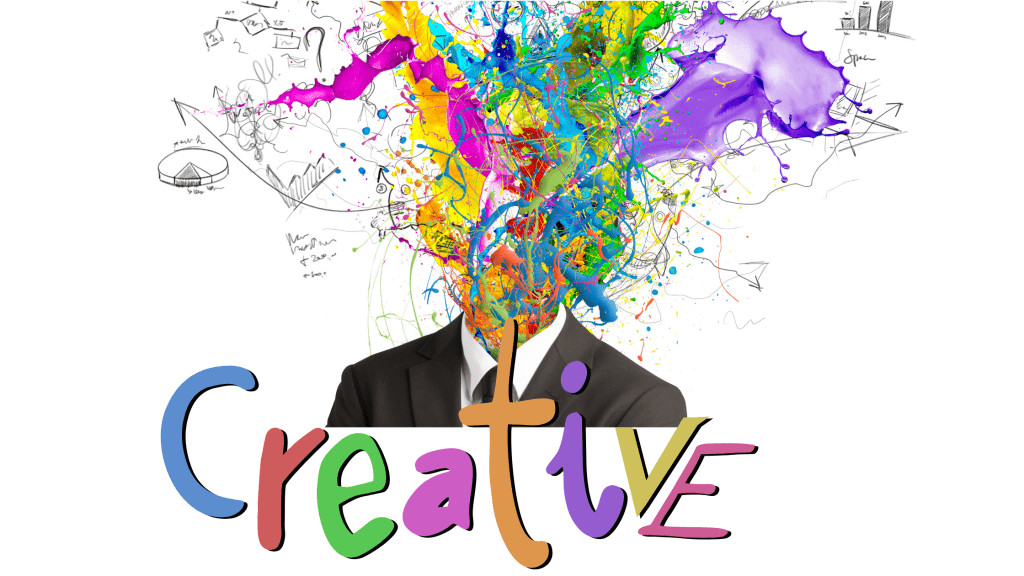
Debunking Creativity Myths
Are you a CREATIVE INDIVIDUAL? What’s preventing you from unleashing your creativity? Do you have to be an artist to be creative?
You don’t have to be a singer, musician, or actor to lay claim to your creative side. Creativity knows no bounds; it transcends the traditional labels we often associate with it.
The Universality of Creativity
If you’re improving even a tiny aspect of yourself compared to yesterday, you’re expressing creativity. YOU EMBODY CREATIVITY. Each day is an opportunity for personal growth and innovation. It’s not just about painting a masterpiece or composing a symphony; it’s about continuously refining and enhancing yourself.
Creativity Beyond the Arts
If you find a way to simplify your work processes today compared to yesterday, you’re being creative. The essence of creativity lies in making things better, more efficient, and more effective. It’s not confined to the arts; it’s a fundamental aspect of human progress.
Embracing Your Unique Creative Self
Every person possesses creativity and unique talents. We’re all born with the capacity to innovate and create. The question is not whether you are creative, but what’s holding you back from embracing your creative self.
Overcoming the Internal Critic
It’s your SELF-CRITICISM—no one else. The critical voice within is often the most significant barrier to unlocking your creative potential. Those self-doubts and judgments can hinder your creative expression and stunt your personal growth. But remember, it’s within your power to silence that inner critic and unleash your creative genius.
Conclusion
So, do you consider yourself a CREATIVE INDIVIDUAL? The answer is a resounding YES. The only thing stopping you from becoming the creative force you were meant to be is your self-criticism. Challenge those doubts, and watch your creativity soar to new heights. Embrace your creative self and see where it takes you. Your potential is limitless.

The WARNING is WELCOMING…

The WARNING is Welcoming… When you forbid a child from doing something, they often want to do it even more. The stricter the rules, the more determined they become to do what you’re trying to stop. This is an exciting part of human psychology. People often become more defiant when faced with more restrictions. This behavior continues into adulthood.
The Curious Case of Cigarettes and Alcohol:
“Cigarette smoking is injurious to health” or
“Alcohol consumption is injurious to health.”
These warnings are plastered all over, and the dangers of smoking and excessive drinking are well known. Yet, people still reach for cigarettes or drink alcohol. Why? Our brains like challenges. It’s the warnings that make us curious and more likely to try.
The Allure of Forbidden Fruit:
It’s a fascinating phenomenon. The very act of forbidding something seems to awaken our deep curiosity. This is not just limited to children testing the boundaries set by their parents; it continues into adulthood. When we’re told not to do something, it’s as if a gauntlet has been thrown, and our inner rebel awakens. We want to prove that we can defy the odds.
Understanding Our Brain’s Attraction to Challenges:
The brain is wired to seek novelty and adventure. It’s not just about doing what’s forbidden; it’s about pushing our limits and exploring uncharted territories. When we hit the gym, we begin with a 5kg dumbbell, and after months of practice, our biceps muscles yearn for a 25kg dumbbell curl. It’s these challenges that push us to progress continuously in our lives. Embracing challenges makes us better and fulfils our innate desire for growth.
Embracing the Right Challenges:
So, how can we use this understanding to our advantage? It’s essential to approach and accept life’s challenges wisely. Instead of shying away from warnings and restrictions, we can channel that curiosity and determination into positive challenges. When we accept the right challenges, life takes us on a path to success.
The Path to Success:
Accepting the right challenges means embracing opportunities for growth and self-improvement. It means tackling obstacles with a positive mindset and using warnings as a source of motivation. When we approach challenges with a clear goal and a willingness to learn, we’re more likely to achieve success.
The Pitfalls of Improper Challenges:
On the other hand, accepting improper challenges—those that lead us down destructive paths—can have serious consequences. It’s essential to discern between challenges that nurture our growth and those that hinder it. When we ignore warnings and engage in reckless behavior, we risk diverting our lives in a different, often negative direction.
Conclusion:
Accept the Right Challenge — — Life will take us to a successful path.
Accept improper challenges — — Life may take us in a different direction.