


During a casual dinner, ignoring how your friend can consume half a pizza without gaining an ounce is impossible. Is it genes, a fast metabolism, or an oasis of unseen benefits hidden within the body systems? Ayurveda, the ancient system of Indian medicine, has a fascinating perspective on the subject.
The Ayurveda to Body Weight and Eating Habits
Still, how can people indulge in food yet maintain an enviable thin figure? Ayurveda points towards an answer. This science acknowledges that every moment in your mind translates into a corresponding event in your body. And these interactions occur through three central operating systems coined ‘Doshas’:
1. Vata Dosha
2. Pitta Dosha
3. Kapha Dosha
These Doshas profoundly influence physiology, personality, and general well-being.
The Dosha Dynamics: A trio governing wellness
Every cell in our body contains all three Doshas, but typically, one Dosha is more dominant. A combination of two Dosha types like Vata-Pitta may be more conspicuous in some individuals. In some all 3 Doshas are balanced.
Here are some very few of the critical traits of all 3 Doshas:
Vata Dosha:
· Light, thin build
· Irregular hunger and digestion
· Tendency to worry
· Tires easily
· Enthusiasm, imagination.
Pitta Dosha:
· Medium build
· Medium Strength and endurance
· Consistency in meal patterns
· Sharp Intellect
· Like challenges
Kapha Dosha:
· Solid, powerful build
· Slow digestion
· Tendency to gain weight
· Steady Energy
· Tranquil, Relaxed personality
Among all, Vata types can eat anything without gaining weight.
Does one of these descriptions sound more like you?
Vata: The Effortless Thin Phenomenon
If your dominant characteristic is the Vata dosha, you’re likely naturally thin with a lighter physique. Thanks to a quick metabolism, you may enjoy the freedom of eating nearly anything without gaining weight. But it doesn’t mean you’re exempt from health concerns; ease with weight management could also entail irregular hunger and digestion-related issues.
Conclusion:
So, the next time you ponder how your friend doesn’t put on weight even after indulging in food, know it’s their Dosha playing a part. Unveiling your Dosha blend provides clues to maintaining optimal health and body weight. Recognizing these Ayurvedic principles can also help substantiate the dialectic relationship between mind and body events.
For further reading, I can recommend the book PERFECT HEALTH by Dr. DEEPAK CHOPRA.
Why ONLY 1% Daily improvement?

Have you ever wondered why certain people achieve so much in a day while others seem stuck in a never-ending circle of procrastination and regrets? It’s all about how they manage the challenges life throws at them. Let’s dive into the fascinating world of 1% daily improvement and see why it could be the key to unlocking your full potential.
How Many Challenges Can You Handle?
Picture this situation: you’ve been handed a hefty 300-page book and are told to read it all in a single day. By just picturing it, you are probably feeling the steam starting to gush from your ears, right? It’s an enormous task and, quite frankly, overwhelming.
Now, let’s tweak the scenario. Imagine being asked to read just a single paragraph in one day. Suddenly, you’re as cool as a cucumber, aren’t you? That’s because it’s a task you know you can easily handle. You see, our brains are wired to love a challenge—provided it’s something manageable.
Taking on Overwhelming Tasks
It’s clear. If you give someone a huge task, they’ll likely get overwhelmed and have trouble even starting it. Overcoming this feeling of being stuck when faced with an immense task is difficult. Just the thought of beginning can be scary. This, my friends, is where the beauty of 1% daily improvement comes into play.
The Magic of 1% Daily Improvement
The secret of 1% daily improvement is all about breaking tasks down into bite-sized, manageable chunks. It’s about telling your brain, “Hey, let’s take baby steps here.” It’s not running a marathon; it’s more like slowly but steadily walking towards the finish line.
Apply this concept to every area of your life, whether learning a new skill, losing weight, or climbing the corporate ladder. A 1% daily improvement leads to compounding progress that can eventually result in astounding results.
Harnessing Your Brain’s Abilities
Let’s be honest. Our brains aren’t designed to handle the sensory and emotional overload of seemingly impossible tasks. But give it something it can chew on and digest easily, and it’s game on.
Taking small steps and making consistent 1% improvements can help you leverage your brain’s full potential. It’s all about taking one small step at a time and maintaining the momentum. No more overwhelming feelings, just pure, enjoyable progress.
Personal Growth through Incremental Improvement
Embracing the 1% daily improvement concept can lead to significant personal growth over time. It’s all about sustainable, steady, and incremental progress. Don’t sprint only to collapse halfway. Take it slow, and you’ll eventually get further than you imagined.
Conclusion
In essence, mastering the art of 1% daily improvement is about keeping your eyes on the prize while enjoying the journey. It’s not about chasing quick, fleeting success but nurturing steady, consistent growth. And remember, my friend — “The journey of a thousand miles begins with one step.” So, are you ready to start your journey of incremental improvements?

Self-Control: A Step-by-Step Guide to Building Your Willpower Muscle
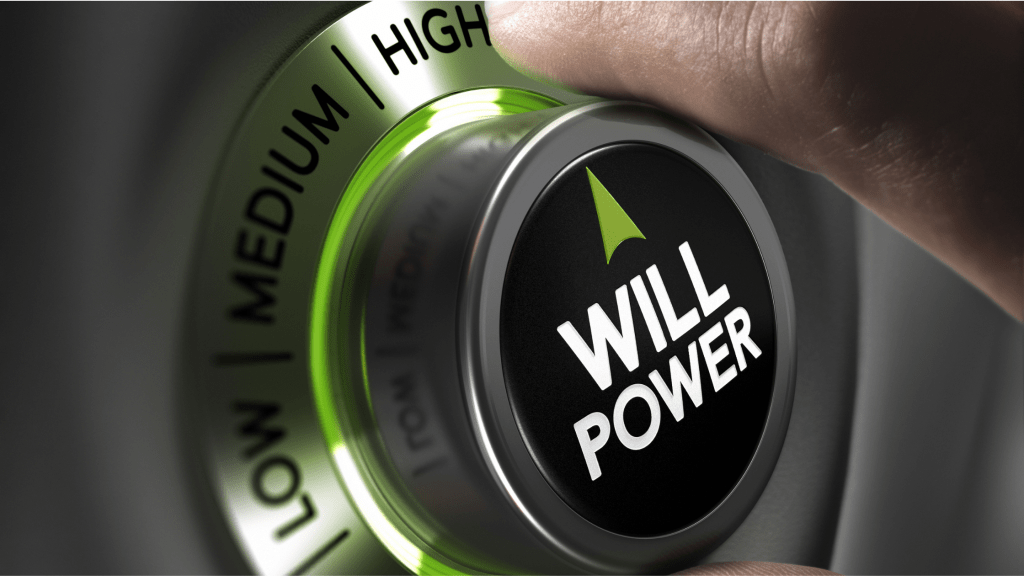
Self-control, the ability to restrain impulses and make deliberate choices, is critical to achieving personal and professional success. Just like any other muscle, your self-control can be developed and strengthened. In this article, we’ll explore the process of building your “Self-Control” muscle and its parallels to physical fitness.
Engaging in Challenging Activities
To develop your “Self-Control” muscle, you must engage in activities you might typically avoid attempting. These activities serve as mental workouts, helping you better resist temptations and make disciplined decisions.
Start Small, Gain Big
Just as you wouldn’t attempt to lift the heaviest weights at the gym on your first day, starting with manageable tasks to strengthen your self-control is important. Here are some simple tasks to kickstart the process:
1. Sit Straight: Commit to maintaining good posture wherever you sit for 15 days. This seemingly minor adjustment can help you cultivate the discipline to follow your intentions.
2. Social Media Limit: Limit your social media usage to 30 minutes daily for the next 30 days. This can be particularly challenging in our hyperconnected world, making it an excellent exercise for building self-control.
3. Daily Writing: Challenge yourself to write something every day. It could be a sentence, a paragraph, or a whole page. The key is consistency.
You choose any activity you want to start. These 3 are some basic examples.
One Task at a Time
Working on only one task at a time is essential to avoid overwhelming yourself. Focusing on a single challenge allows you to dedicate your mental resources to effectively building self-control.
Building Your “Self-Control” Muscle
As you gradually work on any tasks, you’ll notice a transformation in your ability to exercise self-control. It’s akin to building your biceps at the gym. As consistent workouts develop physical strength, these self-control exercises will enhance mental discipline.
The Gym Analogy
I went to the gym consistently for two years. Now I take a break sometimes for a few months. It takes just a month to regain my muscle tone at the gym, even after a break. The same principle applies to strengthening your willpower muscle.
Flexing Your Willpower
In essence, developing your willpower is like developing any other muscle. You start with more minor challenges, work consistently, and over time, you can flex your willpower whenever needed. The key is patience and perseverance.
In conclusion, building your “Self-Control” muscle is entirely feasible. By engaging in tasks that challenge your self-control, starting small, and working consistently, you’ll witness significant improvements in your ability to make disciplined choices. It’s a journey of self-discovery and growth that can lead to remarkable personal and professional achievements. So, are you ready to start building your “Self-Control” muscle today?

Do we need 5G for Netflix, Instagram, or Facebook?

Do we genuinely require 5G technology for our daily data needs? The International Telecommunication Union (ITU) has mandated a remarkably low latency of 1ms for 5G-NR. Latency, in simpler terms, is the time it takes to transfer data from the mobile tower (gNB) to the user equipment, such as your mobile or other devices.
5G’s Lightning-Fast Data Transfer
To grasp the significance of 1ms, consider the blink of an eye. Researchers at UCL suggest an average blink duration of 100–150 milliseconds, while the Harvard Database of Useful Biological Numbers notes a range of 100 to 400 milliseconds (source: https://en.wikipedia.org/wiki/Blinking).
With this in mind, imagine the lightning-fast data transfer capabilities of 5G, particularly under ideal conditions. All factors align perfectly in this scenario, from abundant bandwidth and optimal network conditions to the strongest signal strength.
4G Versus 5G: Streaming and Beyond
Now, let’s return to the essential question: Do we need 5G to enjoy streaming on Netflix, browsing Instagram, or scrolling through Facebook? The current 4G network is often more than sufficient for everyday users like you and me. If you’ve ever experienced issues like occasional buffering while watching Netflix, the culprit is typically not the absence of 4G-LTE technology. Instead, it’s often a result of the network’s quality, which the operator provides. Factors like signal strength and available bandwidth come into play here. For an operator, bandwidth is akin to the size of a water pipe—the larger the pipe, the more data flows to your device in less time. In this analogy, smaller pipes take longer to deliver the same volume of data.
So, if we’ve clarified this far, the question arises: Why is 5G-NR technology generating so much buzz, with operators racing to adopt it?
The promise of enhanced speed and more significant data volume offers users a future of digital luxury. However, this utopia will only be realized after several years when 5G handsets are ubiquitous and a nearly seamless 5G network covers the globe.
But before we get to that stage, let’s explore why ITU is pushing for 5G-NR technology, considering various use-case scenarios and their specific criteria.
5G-NR Use cases
ITU suggests 3 prominent use cases for the development of 5G-NR.
3 primary use cases for 5G:
1. eMBB (enhanced Mobile Broadband) for tasks like mobile cloud computing.
2. uRLLC (ultra-Reliable Low Latency Communications), ideal for applications such as Smart Vehicles.
3. mMTC (Massive Machine Type Communications), e.g. for Smart Cities.
Each use case has specific requirements.

It’s important to note that a single type of technology isn’t confined to just one specific use case. A smart vehicle, as an example, can seamlessly fit into all three categories. It falls under uRLLC due to its demand for high reliability and ultra-low latency. Moreover, it might incorporate devices within the uMBB category, utilize high-data-rate services, and even accommodate numerous smaller devices needing extended battery life.

Conclusion:
These advanced use cases raise the question of why we’re considering 5G for our day-to-day mobile usage.
It’s akin to choosing between a 5-star or 4-star hotel at nearly the same price.
After all, who doesn’t appreciate a touch of luxury?

Are you a CREATIVE PERSON?? What’s preventing you from being creative?
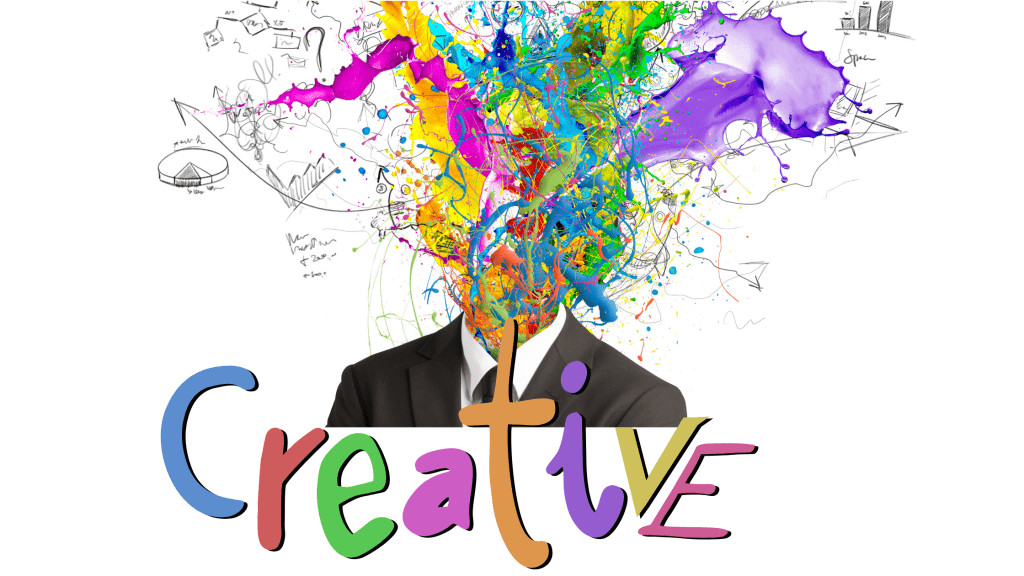
Debunking Creativity Myths
Are you a CREATIVE INDIVIDUAL? What’s preventing you from unleashing your creativity? Do you have to be an artist to be creative?
You don’t have to be a singer, musician, or actor to lay claim to your creative side. Creativity knows no bounds; it transcends the traditional labels we often associate with it.
The Universality of Creativity
If you’re improving even a tiny aspect of yourself compared to yesterday, you’re expressing creativity. YOU EMBODY CREATIVITY. Each day is an opportunity for personal growth and innovation. It’s not just about painting a masterpiece or composing a symphony; it’s about continuously refining and enhancing yourself.
Creativity Beyond the Arts
If you find a way to simplify your work processes today compared to yesterday, you’re being creative. The essence of creativity lies in making things better, more efficient, and more effective. It’s not confined to the arts; it’s a fundamental aspect of human progress.
Embracing Your Unique Creative Self
Every person possesses creativity and unique talents. We’re all born with the capacity to innovate and create. The question is not whether you are creative, but what’s holding you back from embracing your creative self.
Overcoming the Internal Critic
It’s your SELF-CRITICISM—no one else. The critical voice within is often the most significant barrier to unlocking your creative potential. Those self-doubts and judgments can hinder your creative expression and stunt your personal growth. But remember, it’s within your power to silence that inner critic and unleash your creative genius.
Conclusion
So, do you consider yourself a CREATIVE INDIVIDUAL? The answer is a resounding YES. The only thing stopping you from becoming the creative force you were meant to be is your self-criticism. Challenge those doubts, and watch your creativity soar to new heights. Embrace your creative self and see where it takes you. Your potential is limitless.

The WARNING is WELCOMING…

The WARNING is Welcoming… When you forbid a child from doing something, they often want to do it even more. The stricter the rules, the more determined they become to do what you’re trying to stop. This is an exciting part of human psychology. People often become more defiant when faced with more restrictions. This behavior continues into adulthood.
The Curious Case of Cigarettes and Alcohol:
“Cigarette smoking is injurious to health” or
“Alcohol consumption is injurious to health.”
These warnings are plastered all over, and the dangers of smoking and excessive drinking are well known. Yet, people still reach for cigarettes or drink alcohol. Why? Our brains like challenges. It’s the warnings that make us curious and more likely to try.
The Allure of Forbidden Fruit:
It’s a fascinating phenomenon. The very act of forbidding something seems to awaken our deep curiosity. This is not just limited to children testing the boundaries set by their parents; it continues into adulthood. When we’re told not to do something, it’s as if a gauntlet has been thrown, and our inner rebel awakens. We want to prove that we can defy the odds.
Understanding Our Brain’s Attraction to Challenges:
The brain is wired to seek novelty and adventure. It’s not just about doing what’s forbidden; it’s about pushing our limits and exploring uncharted territories. When we hit the gym, we begin with a 5kg dumbbell, and after months of practice, our biceps muscles yearn for a 25kg dumbbell curl. It’s these challenges that push us to progress continuously in our lives. Embracing challenges makes us better and fulfils our innate desire for growth.
Embracing the Right Challenges:
So, how can we use this understanding to our advantage? It’s essential to approach and accept life’s challenges wisely. Instead of shying away from warnings and restrictions, we can channel that curiosity and determination into positive challenges. When we accept the right challenges, life takes us on a path to success.
The Path to Success:
Accepting the right challenges means embracing opportunities for growth and self-improvement. It means tackling obstacles with a positive mindset and using warnings as a source of motivation. When we approach challenges with a clear goal and a willingness to learn, we’re more likely to achieve success.
The Pitfalls of Improper Challenges:
On the other hand, accepting improper challenges—those that lead us down destructive paths—can have serious consequences. It’s essential to discern between challenges that nurture our growth and those that hinder it. When we ignore warnings and engage in reckless behavior, we risk diverting our lives in a different, often negative direction.
Conclusion:
Accept the Right Challenge — — Life will take us to a successful path.
Accept improper challenges — — Life may take us in a different direction.

When You have the option to choose, You are the King

Are you ready to wear the crown of your own life? Ever wondered why certain choices make us feel like kings and queens, while others leave us feeling like mere spectators in the grand theater of life? Let’s explore how choice can make you the ruler of your decisions and desires.”
Window Shopping
Imagine a busy place like Delhi’s Sarojini Market, where many sellers call you to visit their shops.
Do you usually go and check what they’re selling? Most of the time, you don’t.
Instead, you prefer going to shops where the salespeople are inside, not calling you.
Why?
Because it feels like you’re in control of your shopping; you choose when to enter a shop, not because someone keeps calling you.
Now imagine, you’re leisurely window shopping in a mall, and out of the blue, a salesperson approaches you, inquiring about what you’re searching for, your initial excitement diminishes, and you make an effort to steer clear of the salesperson.
The Netflix Subscription:
Subscribing to Netflix is enjoyable because it gives you 3 to 4 subscription options to pick from.
Netflix offers a variety of subscription plans, each tailored to different preferences. This empowers you to select a plan that aligns with your tastes, sparking a sense of satisfaction and control over your entertainment.
You feel like you’re in control and can choose your plan. You feel like everything is under your control and you end up buying a subscription plan.
The Salesperson’s Dilemma
Think about a salesperson showing you two shirts and asking, “Which one do you want, red or blue?”
You are more likely to purchase one shirt from the 2 options.
But if the salesperson only had the red shirt and didn’t offer you a choice, you might not be as interested.
In this scenario, choice is your ally. It’s more likely to pique your interest because you have the freedom to make a decision. The absence of choice often leads to hesitation.
Conclusion
Having the freedom to choose makes you feel like you’re the boss of your own life. It’s like being the King of your decisions and what you like.
Choice is the cornerstone of autonomy. The freedom to choose empowers you and gives you happiness, Allowing you to become the master of your own destiny. In life’s grand theater, your choices are the script, and you’re the director.

Hyperfocus or Scatter-Focus: Which Works Better for You?

The battle for productivity is constant in a world filled with endless distractions and a never-ending to-do list. It often boils down to whether you should embrace hyperfocus or scatter focus. These two modes of concentration are like two sides of the same coin, each with unique advantages.
The question is: which one works better for you?
Hyperfocus: The Productivity Powerhouse
When you hyperfocus, you embark on a journey of unmatched productivity. This state of mind allows you to channel your energy and attention toward a single task. It’s like creating an impenetrable shield around your work, safeguarding it from the relentless distractions that seek to derail your progress.
The result is intense concentration that empowers you to accomplish more in less time. Your ability to efficiently tackle the tasks at hand is unparalleled. Hyperfocus is your secret weapon when meeting tight deadlines, solving complex problems, or completing crucial projects.
Scatter Focus: Unleashing Creativity
Conversely, when you embrace scattered focus, you temporarily put aside immediate concerns and open the floodgates of your creative mind. In this state, you let your thoughts roam freely without constraints. This mental wandering is the breeding ground for creativity.
Creative individuals often require scattered focus moments to craft something unique. Whether it’s the process of creating art, composing music, or generating innovative ideas, scatter focus provides the mental playground needed for such endeavors. The absence of time-bound constraints allows your creativity to flourish and take unconventional routes.
The Surprising Link Between Scatter Focus and Innovation
One of the most fascinating aspects of scatter focus is its role in fostering innovation. Remarkable ideas tend to surface when you allow your mind to meander freely. It’s no coincidence that some of history’s most significant breakthroughs and innovations have originated during moments of scattered focus.
Archimedes had the same world-famous “Eureka (I have found it)” moment..
That’s why you often find your best ideas when taking a relaxed bath.
The absence of immediate pressures and distractions creates fertile ground for groundbreaking thoughts and ideas to emerge. It’s a testament to the power of scatter focus in unlocking your creative potential.
In conclusion, the choice between hyperfocus and scatter focus depends on your goals and the tasks. Both have unique merits, and understanding when to employ each can significantly enhance your effectiveness. The key is to recognize the power of both states of mind and leverage them to your advantage.
Pranab Hazarika

Are You “BUSY” or “FREE” in Your Life?

We’ve all been there – the constant rush, the never-ending to-do lists, and the overwhelming feeling of being “busy.” It’s a word that has become all too familiar in our lives. But what if I told you that a simple change in vocabulary could bring about a profound shift in how you feel and live your life? It’s time to explore the power of choosing to be “FREE” instead of “BUSY.”
The Impact of “BUSY”
How do you feel when someone asks for your time, or you find yourself repeatedly saying, “I AM BUSY”? More often than not, it leaves you feeling exhausted and drained. The word “busy” carries a weight, a sense of being overwhelmed, and a lack of control over your time. It’s a word that often leads to stress and anxiety.
Embracing “FREE” and “EASY”
Now, let’s try a simple linguistic shift. Instead of the habitual “I AM BUSY,” replace it with “I AM EASY” or “I AM FREE.” How does that make you feel? Surprisingly, the impact is quite profound. You suddenly feel more relaxed, energetic, and in control of your life.
Relaxed: By choosing “FREE” or “EASY,” you create a mental space for relaxation. The burden of busyness does not weigh you down.
Energetic: The energy you used to expend on stress and feeling overwhelmed can now be channeled into positive and productive activities. You have newfound vitality.
In control: “I AM FREE” signifies that you have control over your time. You can allocate it as you wish without feeling pressured or rushed.
The Luxury of Time
Choosing to be “FREE” instead of “BUSY” is akin to experiencing the luxury of time. It’s like having a hidden treasure that you’ve just uncovered. In a world where time is often seen as a limited resource, this shift in perspective can be life-changing.
Maintaining a State of Calm and Relaxation
Choose your words wisely. Your language reflects your thoughts and, ultimately, your actions. By constantly reminding yourself that you are “FREE” and “EASY,” you are cultivating a state of calm and relaxation in your life.
The effects are transformative. You’ll find yourself with more energy, greater control over your time, and a newfound sense of luxury in your everyday life.
Being “FREE” is a luxury worth cherishing in a world constantly in a hurry.
How long does it take to form a new habit?
Habit creation has always been of great interest in self-improvement and personal development. How long does it take to form a new habit? The well-known motivational speaker and bestselling author Robin Sharma recently referenced a study from the University College of London. It suggests it takes 66 days of continuous effort to hardwire our brains for habit formation and liberate our willpower from specific tasks. While this research sheds light on the process, exploring the intricacies of habit creation is essential.
The Three Stages of Habit Formation:
The 66-day rule divides the habit formation journey into three distinct stages, each lasting approximately 20 days:
1. Destruction Stage (Days 1-20) – The Uphill Battle:
The initial phase, often called the “Destruction Stage,” is arguably the most challenging. During these first 20 days, you’ll face a steep uphill battle. This is when breaking away from your old routines and embracing a new habit can feel arduous. Your willpower is put to the test, and motivation can wane.
2. Confusion Stage (Days 21-40) – The Rollercoaster of Doubt:
As you progress into the second phase, the “Confusion Stage,” you may question your commitment to the habit. Doubt and uncertainty can creep in, making it tempting to give up. This is the critical point where many individuals falter. Staying on track during these days is essential.
3. Integration Stage (Days 41-66) – Automaticity and Mastery:
Once successfully navigating the first 40 days, enter the “Integration Stage.” During this phase, your actions start to become automatic. The habit is no longer a burden but a natural part of your daily routine. Your willpower is liberated from the task, and the habit becomes a part of your identity.
How I Cultivate the Habit of Reading and Writing:
I’ve been reading books unrelated to my studies since 2014. I’ve also been writing almost every day since 2017. While I don’t publish my writing often, I do it regularly, and it’s become a habit. Now, I enjoy reading and writing.
Variability in Habit Formation:
While the 66-day guideline is valuable, it’s essential to acknowledge that habit formation is not a one-size-fits-all process. The time required to establish a new habit can vary widely from person to person. It largely depends on individual intentions, interests, and the complexity of the habit itself. Some may succeed in as little as 4 days, while others might need up to 90 days or more.
Conclusion:
The 66-day habit creation rule offers valuable insight into the journey of habit formation. It emphasizes the need for perseverance and dedication in the initial stages and the eventual reward of automaticity and mastery. However, it’s essential to understand that the path to forming new habits is not uniform, and individual differences play a significant role. Regardless of the duration, the key lies in consistency and an unwavering commitment to positive change.
In your pursuit of creating new habits, remember that the process is a personal journey. The 66-day benchmark provides a helpful guideline, but the accurate measure of success is the habit’s positive impact on your life.
So, whether it takes 20 days, 66 days, or even longer, stay committed to your habit-building journey, for it is a path toward self-improvement, growth, and lasting change.